Welcome to our weekly gathering around the campfire. This free communique will level up your endurance skills in ten minutes, twice a month. Forwarded this message? You can sign up for these emails by clicking here.
29 JAN 2026
For well over the first half of my professional career, I was labeled an “emotional athlete.” For a certain subset of the human race, this shorthanded euphemism comes in several other forms along a spectrum from the annoying “sensitive,” to the dismissive “hysterical,” and ending in the dehumanizing and dangerous “loose.” I am not claiming citizenship in that particular subset, but I do know what it’s like to be called “emotional” and have it mean, well, something else.
In this case that “something else” appears to have been “undisciplined” if the describer was being nice, or “riding like a stupid asshole,” if the describer wasn’t concerned with hurting my feelings. Reflecting on it, that term was not only a misleading euphemism for weaknesses in my game that went un-coached, but was also pointless.
Everyone has emotions, and is therefore an emotional athlete. The problem isn’t in eradicating or stopping the emotions, which was the message I received, but in figuring out where those emotions came from and what they were trying to tell me. The prevailing image of the high-performing athlete is one of stony rectitude, an avatar of the “no pain, no gain” cult. But in my experience competing alongside high-performers and interviewing many of them over the years, these athletes are anything but stony. They feel deeply, but either through proper parenting, excellent therapy, or evolved coaching, they can take those emotions and let them power their racing rather than obliterating it.
You hear about “mastering your emotions” a lot these days, usually on social media, but you will never master your emotions any more than a surfer masters a wave. To believe that you will put a set of reins on a wave and direct it through force of will is ridiculous, and the best surfers don’t aim control over the wave, but act in partnership with, creating something beautiful together. This is one of those concepts that becomes so much clearer through this particular metaphor. Your emotions are large, powerful, mysterious forces that move through you the way a wave does, differing in amplitude and wavelength but always inexorable and insistent.
On Monday we'll come out with an episode of The Infirmary that explores this issue and gives you a step-by-step process for recognizing your emotions, honoring them, and using their significant power to improve your performances. Here's the list now to give you something to chew on over the weekend:
- Learn how to identify emotions in the first place.
- When you feel an emotion that is uncomfortable or overwhelming, do not dismiss or deny it. Try to feel the sensations that arise without distracting yourself.
- Don’t think or act yet. Emotions can take some time to run their course. You cannot think your way out of uncomfortable emotions. If you try to do so, you are simply delaying the emotion coming out later, and bigger.
- Since you did step one, name the emotion. If you need an emotion wheel, here’s a good one.
- Naming something often lessens its impact, and if you wait and name it, your body will begin to relax and process the emotion. Most of the time, negative emotions trigger activity in your amygdala, which is powerful but not part of the rational brain. You need to give that part of your brain a chance to relax and realize it’s not under threat.
- If you’re not actually in a race or a training session, sit down and try to figure out when you felt that emotion before (hmmm, sounds a lot like our first post…). It’s likely that, in this moment, you are actually responding to THAT event, especially if you didn’t process it effectively.
- Thinking about that moment, what did you need to hear or experience that was different from what you experienced?
- When you feel the emotion arise in a way that seems like it might derail your day, your workout, or your race, give or say to yourself what that previous version of you needed. If the message you received was “you don’t belong in this race and you have to PROVE everyone wrong,” then maybe the replacement script is something like “I have prepared to the best of my ability, I qualified for this field under this governing body’s rules, and all I can do right now is focus on my attitude and my effort. That reminder alone will help me perform better.”
- Coaches, you can help your athletes with this, too, but please first ask permission and remind them that you aren’t (unless you are) a therapist of any kind. There are many excellent resources to learn these tools, and if you’re interested shoot me a note.
So tune into the show on Monday, and if you’re not a regular listener, then you can listen wherever good podcasts are distributed.
CAMP CAMP CAMP CAMP
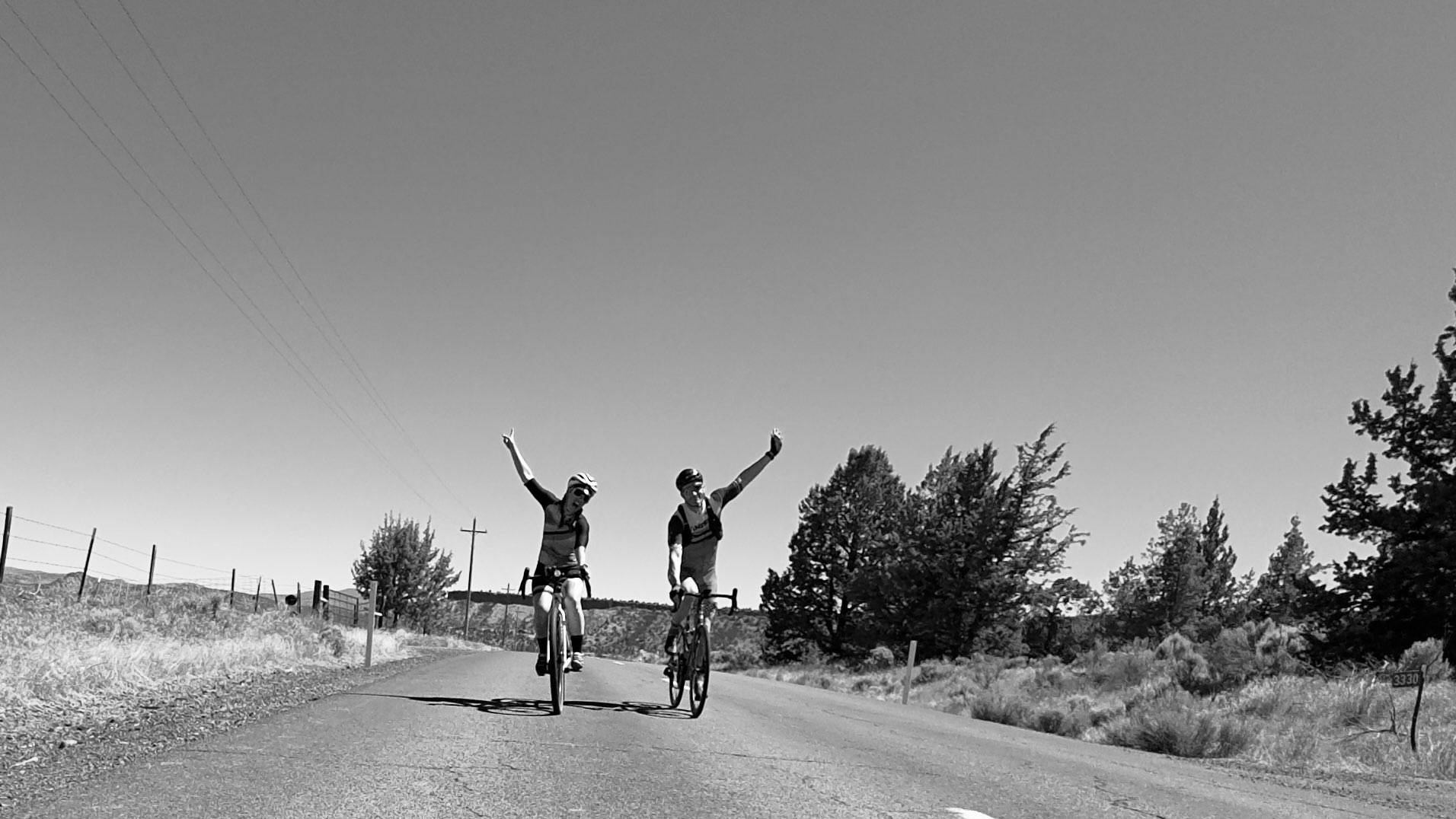
Bend Spring Training Camp is four months away from today. If you want to spend five days and four nights in one of the best training grounds in the country, act now because camp is filling quickly. We're really pulling out the stops at this camp, welcoming coach David Tilbury-Davis to camp this year as one of our coaching staff. If you don't know David...well, he's coached many of the greats in our sport such as Ashleigh Gentle, Lionel Sanders, Skye Moench, and Cody Beals, amongh many others. In addition to getting personal attention from David, you get all the other incredible aspects of camp:
- Lodging included at the incredible LOGE Camps, where you will rest in comfort, surrounded by a fun, Summer Camp-like environment
- All breakfasts provided, prepared for you by camp staff
- Two full dinners, provided by Campfire (other meals are on your own)
- Workout hydration, nutrition for all workouts, provided by our nutrition sponsor Precision Hydration
- Swag from our sponsors and camp partners
|
|

- Fully sagged rides with a support van, providing food, fluid, flat support, and anything else you might need
- Five runs, three swims (and an optional open water swim), three rides (two of them LONG)
- A personalized Swim Video Analysis ($250 value)
- Bodywork from professional manual therapists
- Camp t-shirt, camp water bottle, camp swim cap
- Individualized workout prescriptions
|
As always, thanks for reading.
If you found today's newsletter helpful, consider SHARING IT.
Forward this email to a friend, roll it up and put it in a bottle, send it via semaphore…we’re grateful any which way.
—The Counselors at Campfire Endurance
Presented by Campfire Endurance Coaching
Today's newsletter is presented by Campfire Endurance Coaching.
We help endurance athletes improve their results (get FASTER), find more joy in the process of getting faster (get HAPPIER), and achieve lifelong wellbeing through sport (get HEALTHIER).
Our company has two major services:
- One-to-One Coaching: fully customizable, high-touch coaching built for your life and your goals. Our coaches carry a maximum of 15 athletes so you know you and your goals are always a prioity.
- Training Camps and Clinics: immersive multi-day and single-day events aimed at getting you the most improvement in the shortest amount of time.
If any of those sound like something you would like to take advantage of, you should consider booking a 45-minute FREE coaching and training consultation with us
